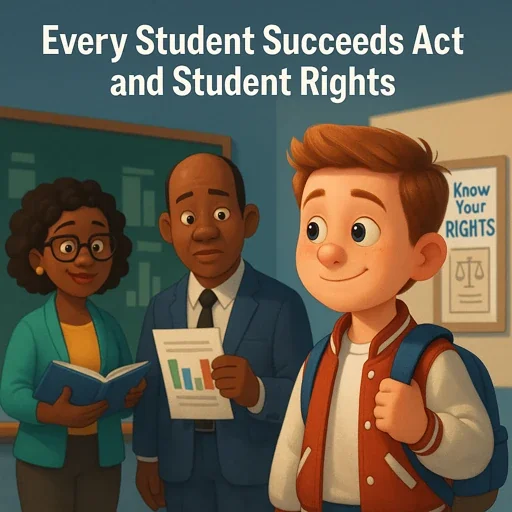
Every Student Succeeds Act (ESSA) and the on-the-ground reality of student rights in Safford Unified School District v. Redding.
This pulled me into two different but connected worlds: federal accountability under the Every Student Succeeds Act (ESSA) and the on-the-ground reality of student rights in Safford Unified School District v. Redding. Together they ask a blunt question: are we protecting children’s learning and their dignity, or are we trading one for the other when things get tense?
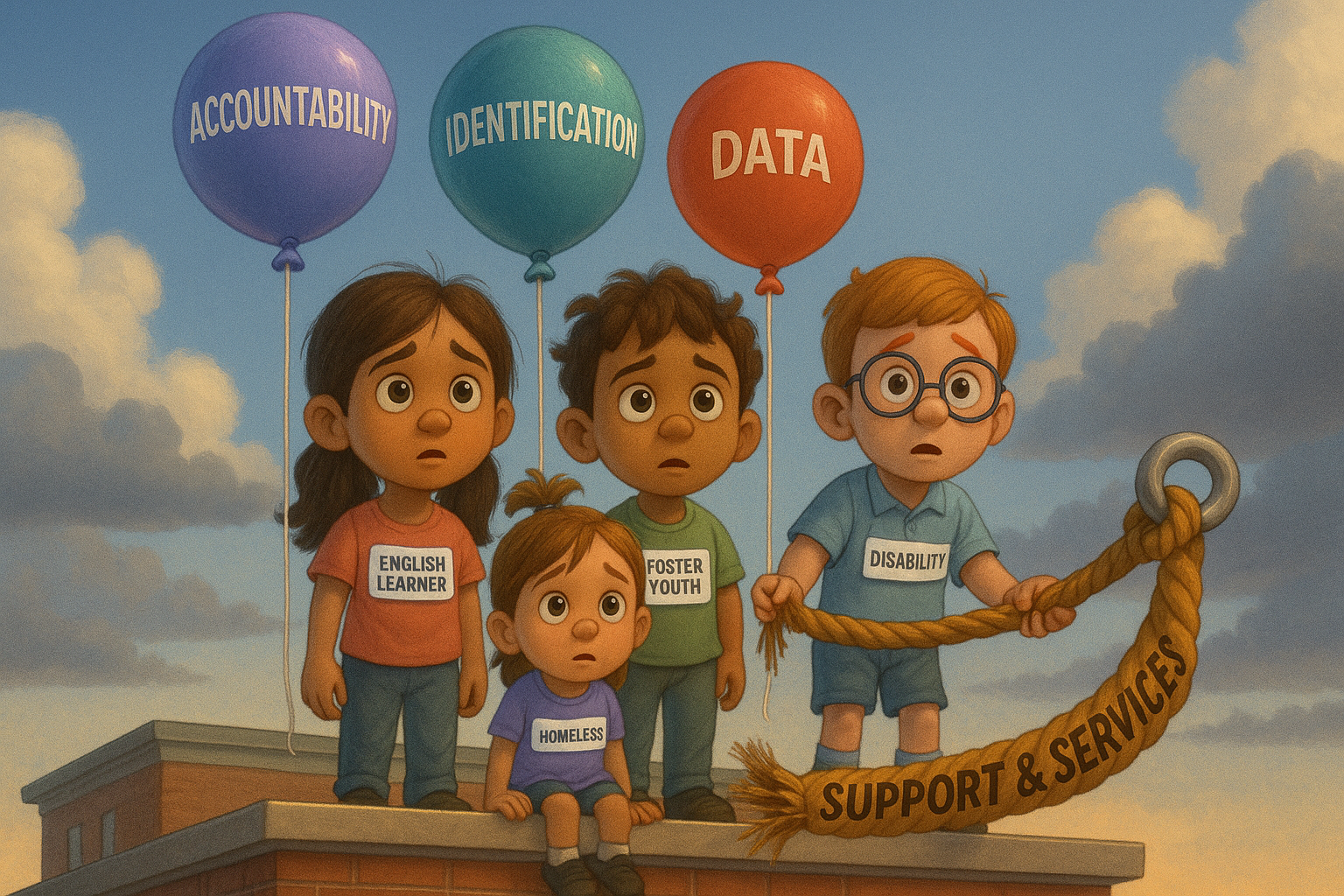
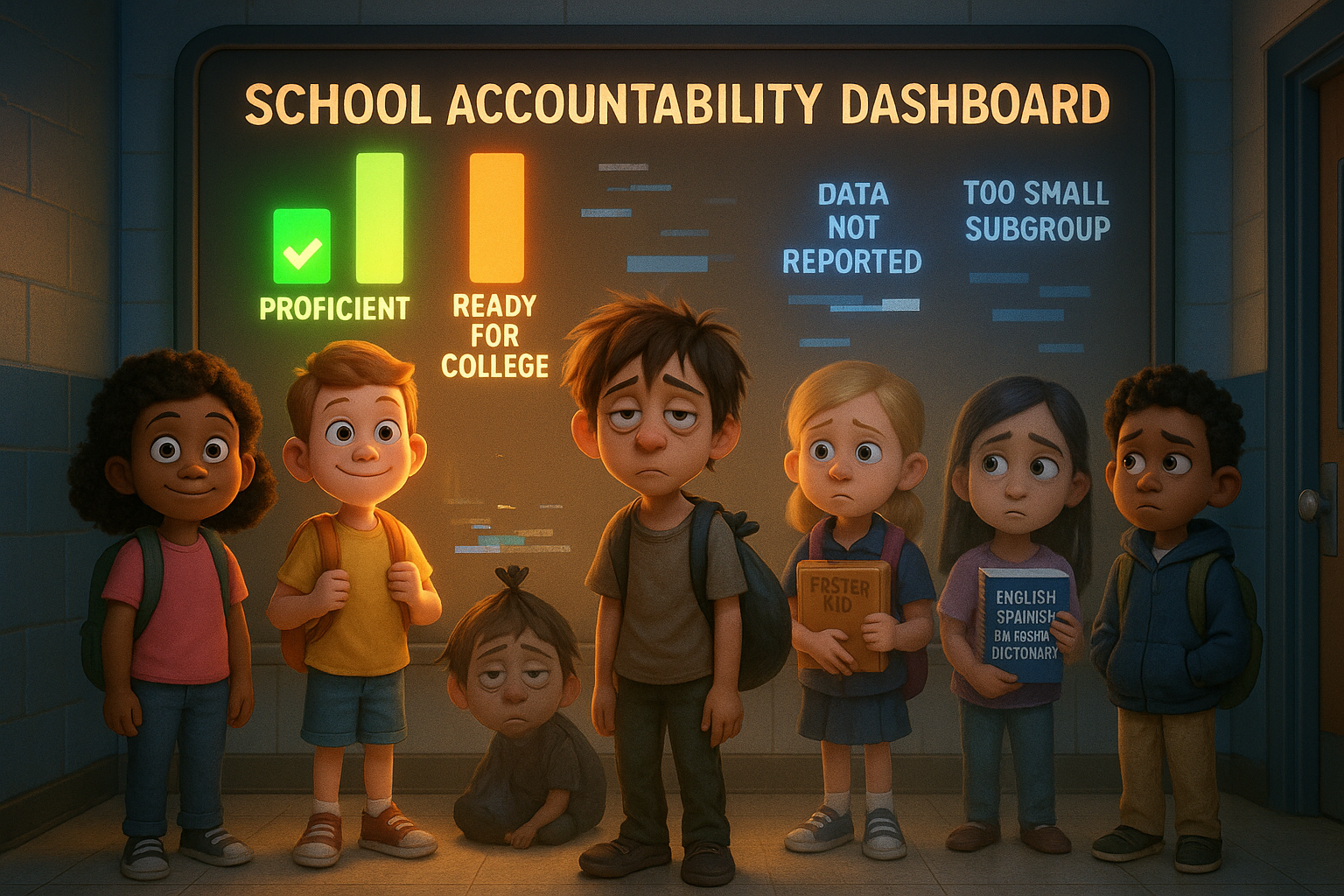
ESSA, enacted in 2015 as the latest reauthorization of the Elementary and Secondary Education Act, is meant to keep the federal equity promise alive while giving states and districts more control. It replaces No Child Left Behind’s rigid, test-driven sanctions with state-designed accountability systems, but still requires states to disaggregate data by subgroup and identify schools where historically marginalized students are not being served. U.S. Department of Education. The readings on “Every Student Succeeds Act: Are Schools Making Sure Every Student Succeeds?” and “The Every Student Succeeds Act and Its Impact on Vulnerable Children” both argue that this structure is only as just as the people implementing it. States now have wide discretion to define indicators, set goals, and decide what “support” looks like, which can either close equity gaps or quietly hide them. In K–12 practice, that means school leaders cannot hide behind the state plan. They have a legal and ethical duty to know how their own subgroup data looks, what interventions are in place for vulnerable children, and whether their “school improvement” narrative actually matches the numbers.
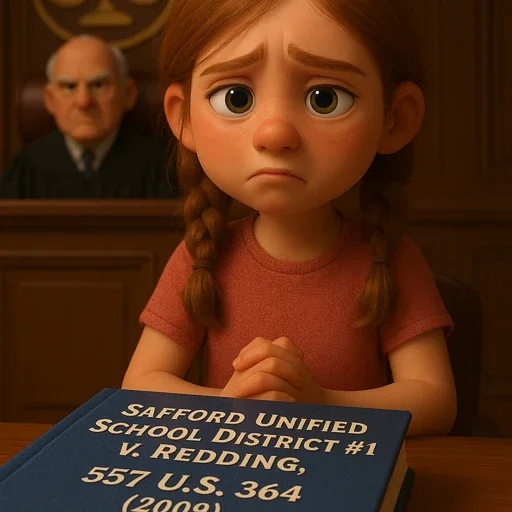
Safford Unified School District v. Redding, sits in a different doctrinal lane but hits the same nerve about power, kids, and boundaries. The case is Safford Unified School District #1 v. Redding, 557 U.S. 364 (2009). The Supreme Court decided it in 2009. The central legal issue was whether a strip search of a 13-year-old girl, Savana Redding, for ibuprofen violated the Fourth Amendment standard for school searches established in New Jersey v. T.L.O., which requires that a search be reasonable at its inception and in scope.
The core facts are painfully simple. School officials received a tip from another student that Savana had prescription-strength ibuprofen. They searched her backpack and other belongings and found nothing, then escalated to a strip search where she was asked to pull out her bra and underwear, still with no pills found. The key conflict was between administrators’ claimed need to enforce a zero-tolerance drug policy and the student’s right to bodily privacy and freedom from unreasonable searches.
The Court’s holding was that the strip search violated Savana’s Fourth Amendment rights because the scope of the search was excessively intrusive given her age, sex, the mild nature of the suspected drug, and the lack of specific reason to think pills were hidden in her underwear. At the same time, the Court granted the individual officials qualified immunity because the law was not clearly established at the time. The rationale built on T.L.O.: school searches do not need warrants or probable cause, but they must still fit the level of suspicion. Here, the “content of the suspicion” did not match the level of intrusion, especially for a young adolescent girl.
When I compared ESSA next to Redding, the main problem that jumps out is this: our laws talk a big game about equity and protection, but in daily practice adults often default to convenience, fear, or public relations instead of students’ rights. ESSA promises that vulnerable children will not be invisible in the data, yet many state systems still allow struggling subgroups to be buried inside overall ratings. Redding shows the same pattern inside a single building, where “safety” became a justification for a search that stripped a child of dignity with no real evidence of danger.
From a K–12 perspective:
Treat ESSA as a civil rights tool, not just a compliance checklist. Regularly look at disaggregated data for students with disabilities, English learners, students in poverty, and students of color, and tie that data to concrete supports, staffing, and scheduling decisions, not just pretty charts for the school improvement plan. U.S. Department of Education Communication
Embed preventive law into discipline and search practices. Use the T.L.O. and Redding standard in administrator and teacher training: reasonable at inception, reasonable in scope, with special care for age, gender, and the seriousness of the suspected infraction. Strip searches should be treated as essentially off-limits in school, except in the rarest, clearly documented emergencies, which is consistent with how Schimmel frames student due process and search protections.
Build transparent communication with students and families about rights. Explain search policies, data use under ESSA, and complaint procedures in plain language. That transparency is part of “practicing preventive law,” where legal literacy becomes a shared protective factor rather than a secret administrator language. Principals_Avoiding_Lawsuits_Ho…
A big pitfall to avoid is thinking that having a policy or state-approved ESSA plan is enough. On paper, districts can look fully compliant while still ignoring subgroup performance or pushing harsh zero-tolerance rules that set them up for a Redding-style lawsuit. The ethical work is slower and messier: constantly checking whether our data practices and our discipline practices actually line up with the law’s values of equity, proportionality, and respect for students as rights-bearing people, not just bodies to be managed.
References
Adler-Greene, L. (2019). Every Student Succeeds Act: Are schools making sure every student succeeds? Touro Law Review, 35, 11–52. Digital Commons
El Moussaoui, S. (2017). The Every Student Succeeds Act and its impact on vulnerable children. Journal of Law and Education, 46(3), Article 6. Scholar Commons
Safford Unified School District #1 v. Redding, 557 U.S. 364 (2009). Justia Law
Schimmel, D., Eckes, S., & Militello, M. (2017). Principals avoiding lawsuits: How teachers can be partners in practicing preventive law. Bloomsbury.





Student speech rights are real
Student speech rights are real, but they live inside a messy ecosystem shaped by safety concerns, community expectations, and decades of case law that doesn’t always agree with itself. Bradley et al. (2017) point out that the First Amendment gives broad protection to student expression, yet schools are not powerless. They can intervene when speech crosses into substantial disruption or threatens the welfare of others. That phrase, “substantial disruption,” does a lot of heavy lifting, and the readings make clear how much interpretation hides inside it.
Tinker v. Des Moines (1969) is the anchor everyone returns to, the constitutional. Students don’t “shed their rights at the schoolhouse gate,” but administrators still have to maintain conditions for learning. This is where the nuance creeps in. Wearing an armband in silent protest is worlds away from a student posting violent, time-specific threats online, which is exactly what played out in Wynar v. Douglas County (2013). Reading that case felt like reading the group chats I used to break up as a teacher, except with higher stakes and a paper trail that never deletes itself. Wynar shows how digital speech muddies the water, because the comments happen off campus yet can create enough fear on campus to justify intervention. Bradley et al. (2017) and Schimmel et al. (2017) both hammer on the same responsibility: schools must act when a threat is credible, and delaying because the speech happened online can actually increase liability.
Schimmel et al. (2017) push the idea of preventive law, which I read as “don’t wait for a legal fire, design the building so it’s harder to burn down.” They stress documentation, consistency, and clarity. I kept thinking about how many principals I’ve watched react emotionally instead of structurally, jumping straight to punishment without the kind of evidence trail that would make their decision defensible. The preventive approach basically says, slow down, gather facts, and make the decision you’d be comfortable justifying in a courtroom, because you might have to.
If I had to pull concrete recommendations from all this, three land strongest. First, schools need speech policies that kids actually understand, not legal text dumped on page 42 of a code of conduct. Bradley et al. (2017) show that clarity upfront avoids half the conflicts administrators deal with later. Second, districts should create digital threat-assessment protocols, because Wynar makes it clear that online speech can’t be handled with 1990s instincts. Teams need to know who evaluates the content, who documents it, and who contacts families. Third, staff need training on “disruption” with real examples, including borderline scenarios, because Tinker only works when educators know what counts as substantial interference and what is just discomfort.
All together, the readings reinforce something I’ve learned in my own classrooms and school teams. Speech issues become volatile when adults panic or improvise instead of following a structure. The law doesn’t promise comfort, but it does expect competence. When schools honor both, student rights feel less like a threat and more like a shared operating system everyone understands.
(Bradley et al., 2017; Schimmel et al., 2017; Tinker v. Des Moines, 1969; Wynar v. Douglas County, 2013)
Guardrails
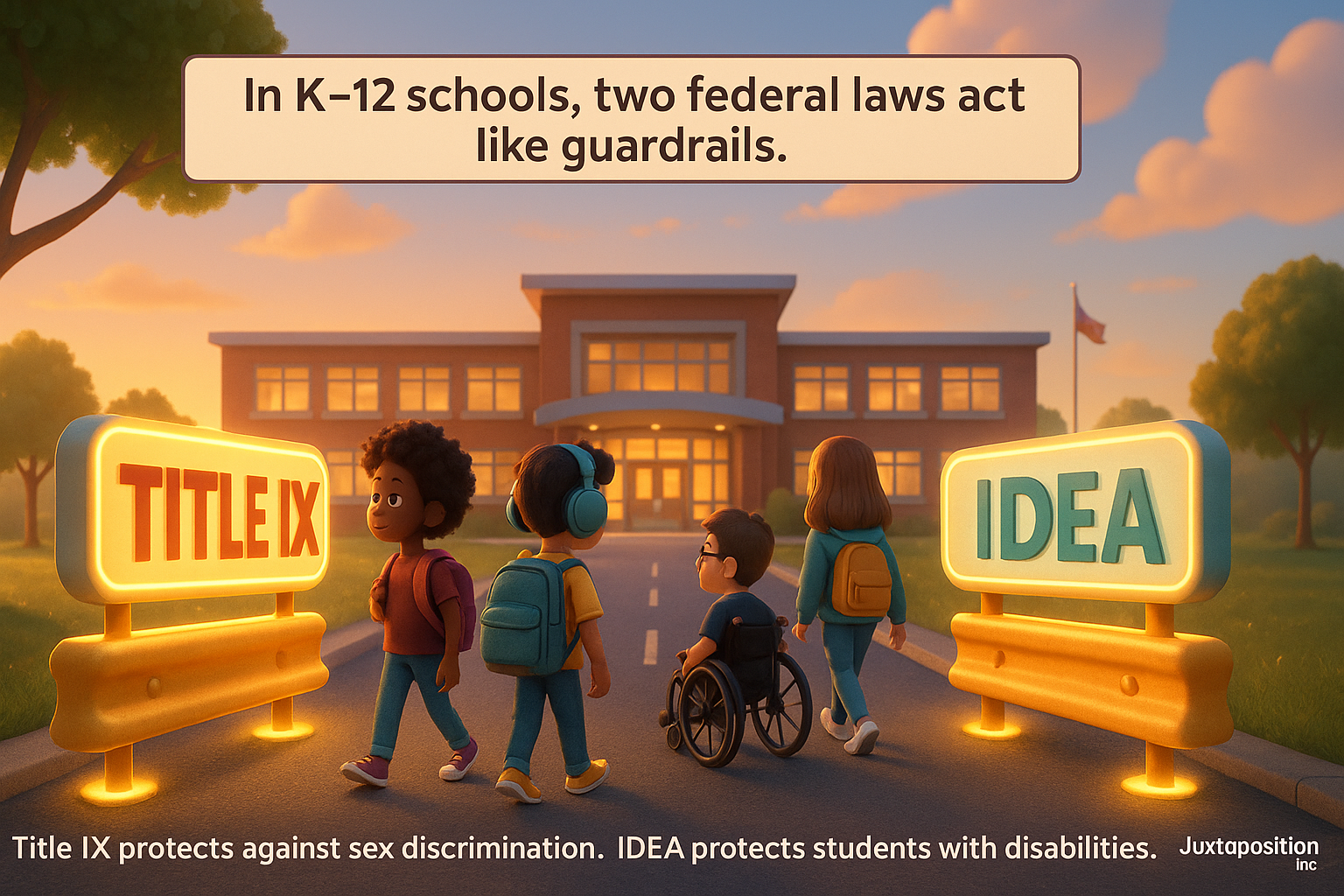
Title IX and the Individuals with Disabilities Education Act (IDEA) sit like twin guardrails on the K–12 highway: one protecting students from sex-based discrimination, the other guaranteeing students with disabilities a genuinely accessible education. Title IX, codified at 20 U.S.C. § 1681 et seq., prohibits discrimination “on the basis of sex” in any education program receiving federal funds, which includes athletics, sexual harassment, and retaliation against people who complain. Legal Information Institute+1 IDEA, by contrast, promises a Free Appropriate Public Education (FAPE) in the Least Restrictive Environment (LRE) for eligible students with disabilities, delivered through individualized education programs (IEPs) and backed by robust procedural safeguards. U.S. Department of Education Bradley’s chapter on law for handicapped students and Schimmel’s chapters on special education and student harassment/bullying translate those federal promises into day-to-day guidance: know the statutes, anticipate the risks, and practice “preventive law” so your teachers don’t accidentally violate students’ rights in the hallway or on the field.
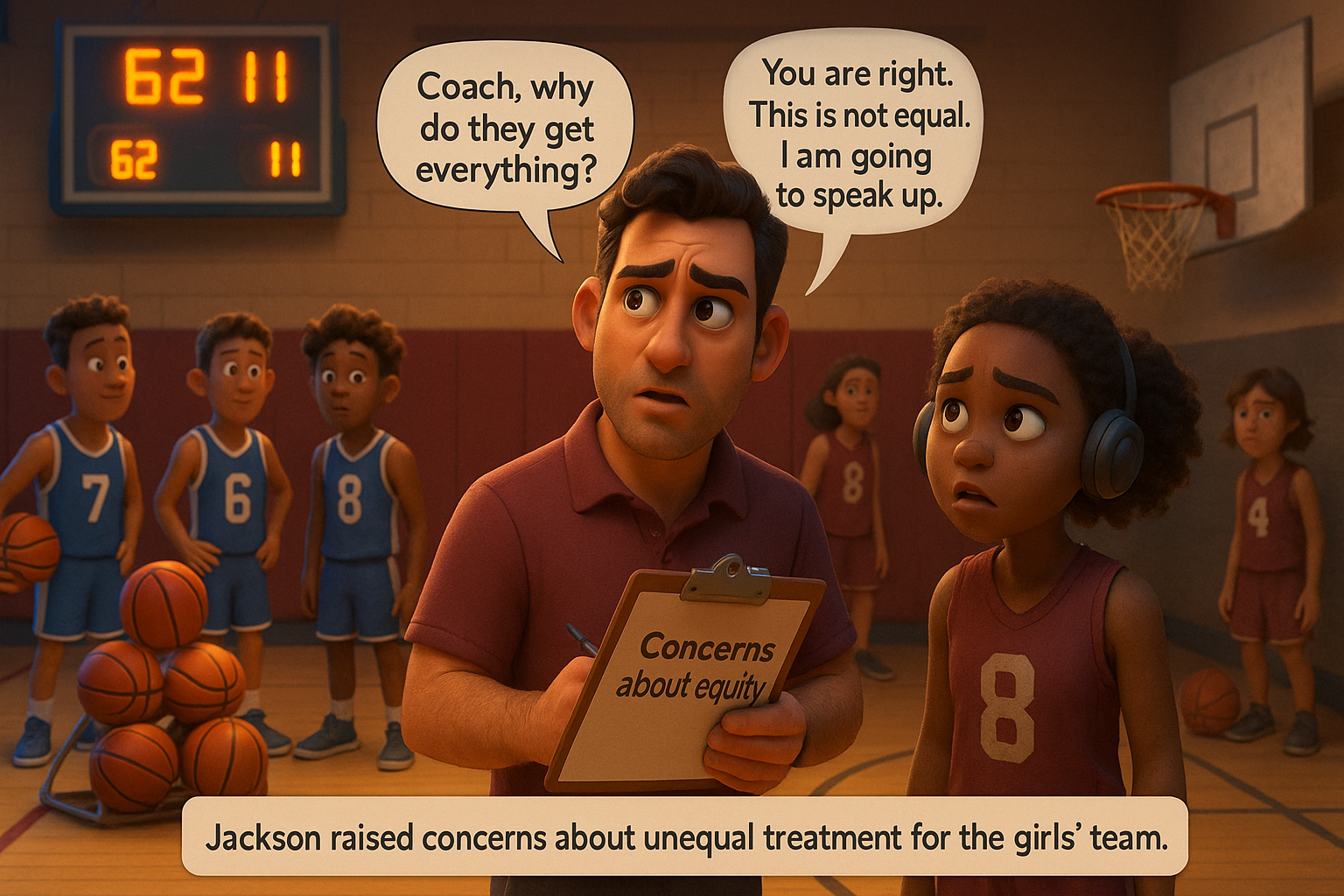
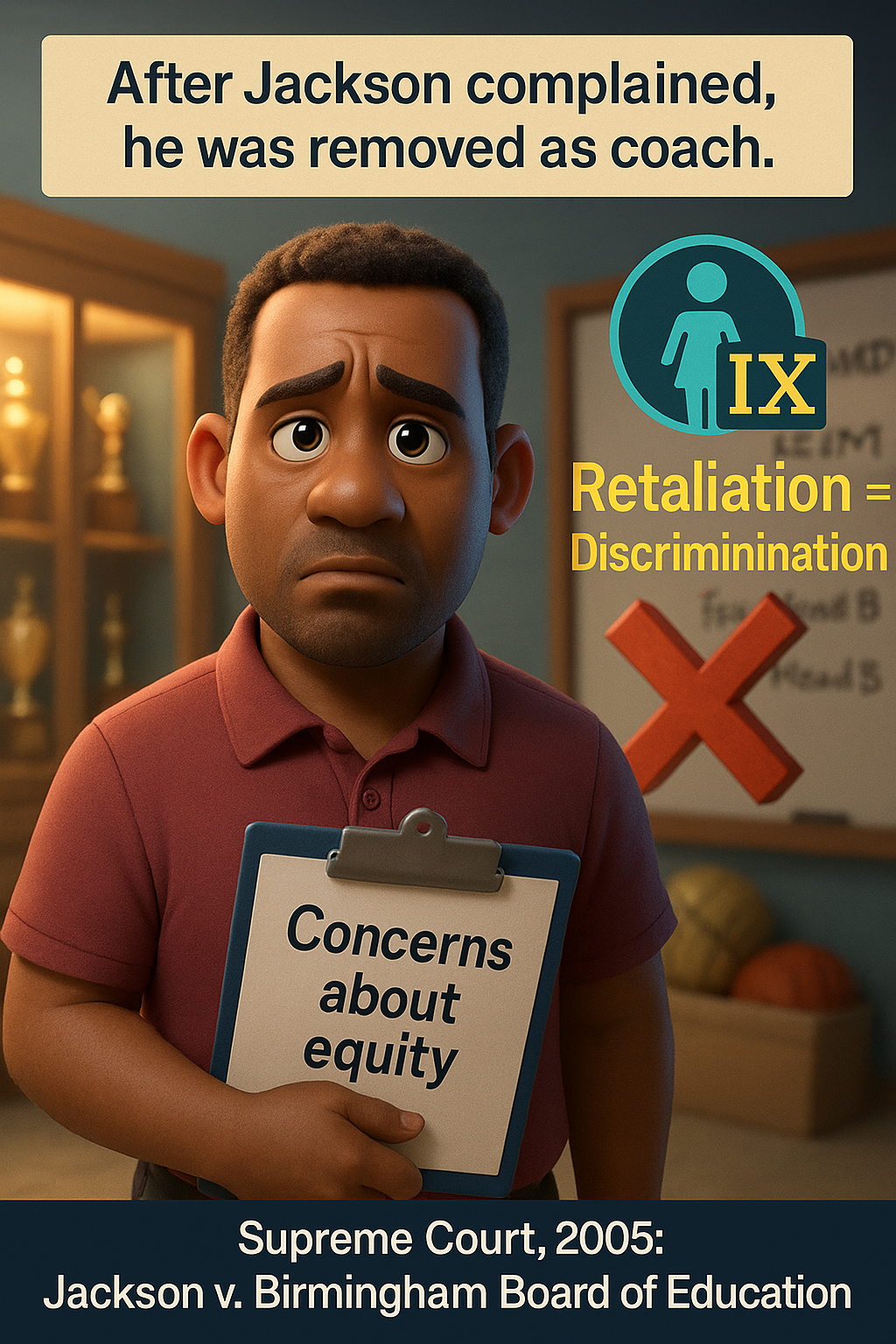
Jackson v. Birmingham Board of Education, 544 U.S. 167 (2005), is the Title IX wake-up call for every K–12 administrator who thinks retaliation is a side issue. The case centers on Roderick Jackson, a high school girls’ basketball coach who complained that his team was treated worse than the boys’ team. After he raised concerns, he was removed from his coaching position and sued, claiming unlawful retaliation under Title IX. The legal issue was narrow but huge: does Title IX’s implied private right of action cover retaliation against someone who complains about sex discrimination? The Court’s holding was yes, retaliation against a person because they complained of sex discrimination is itself intentional sex discrimination under Title IX. The rationale tracks the logic we now teach in school law courses: if you let districts retaliate against whistleblowers, you destroy the enforcement mechanism and gut the statute’s purpose. In a K–12 building, that translates to very practical guardrails: if a teacher reports inequitable funding, locker-room access, or harassment of female or LGBTQ+ students, district leaders cannot quietly punish them by reassigning, isolating, or freezing them out. Jackson doesn’t invent new law so much as make the anti-retaliation principle explicit, and that clarity adds complexity to our HR and supervision practices while staying faithful to Title IX’s core equity mission.
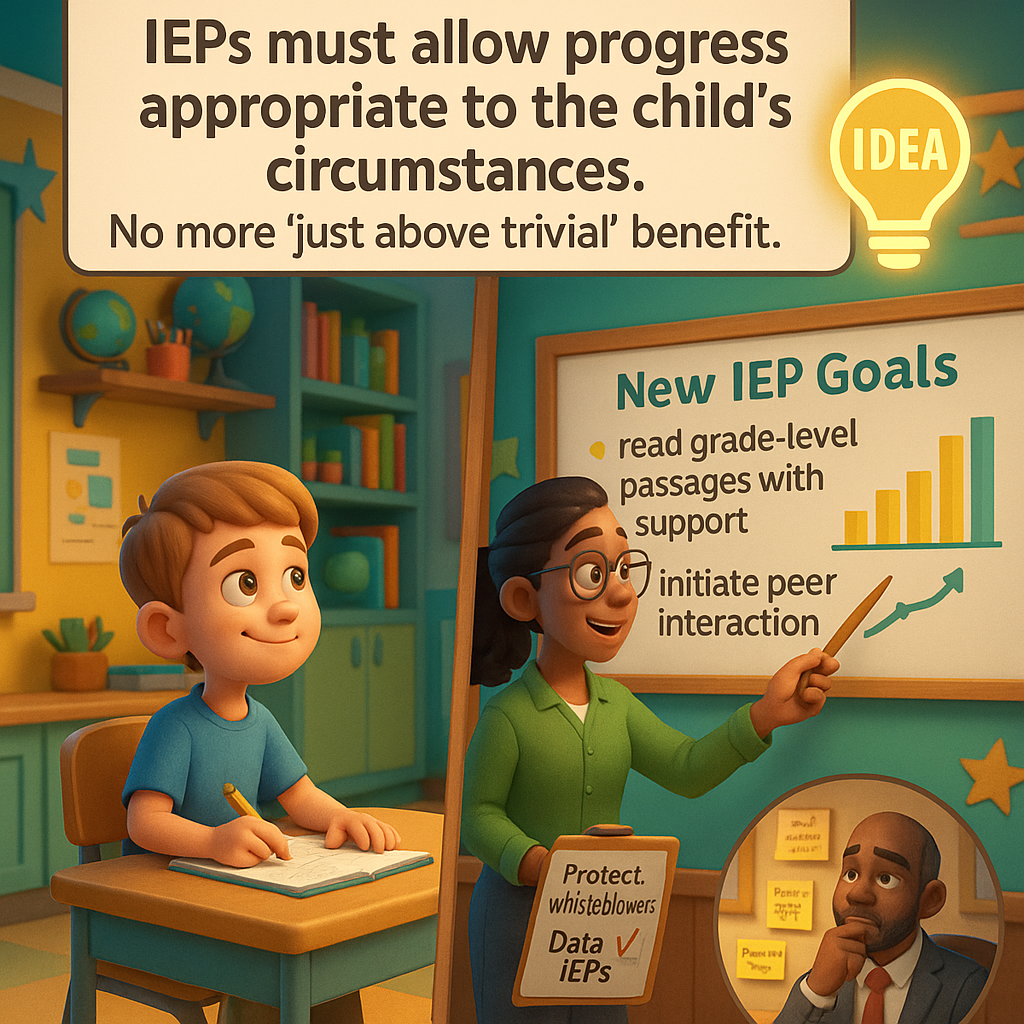
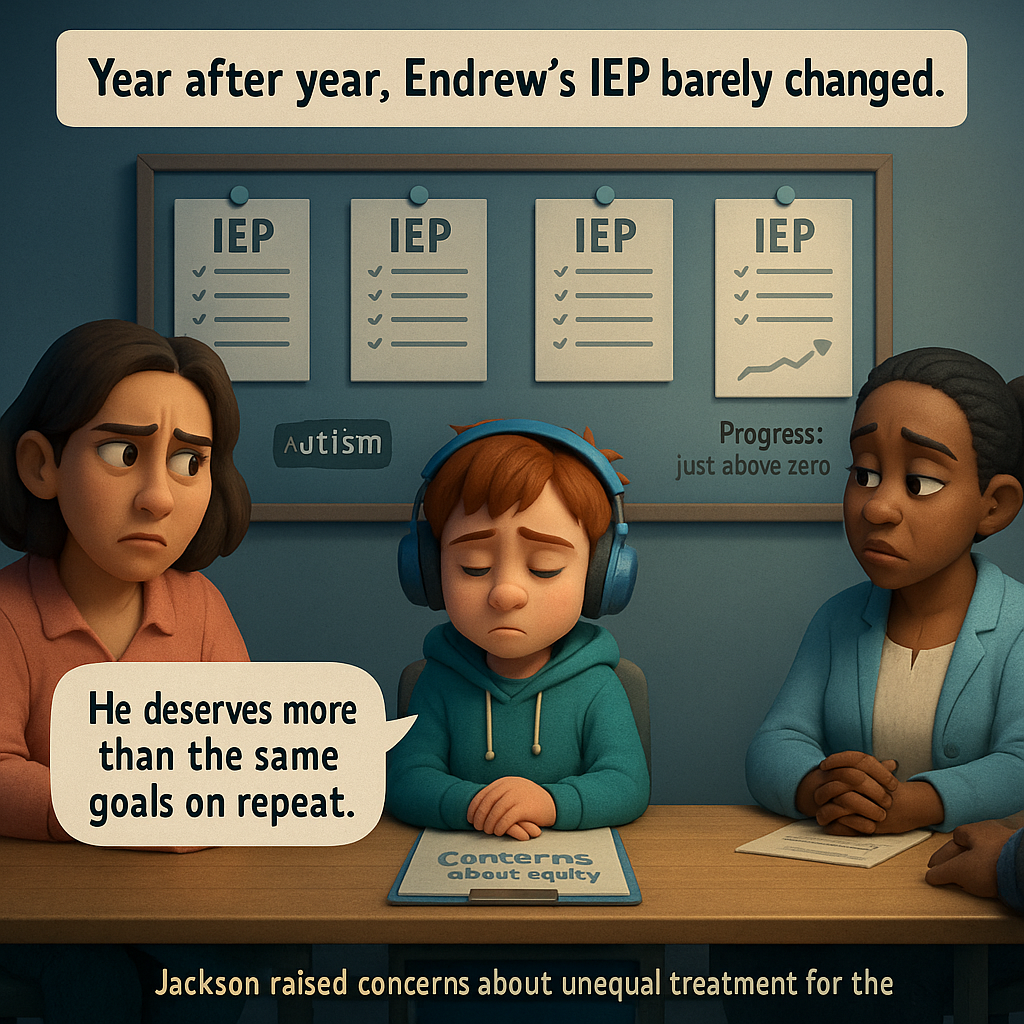
Endrew F. v. Douglas County School District RE-1, 580 U.S. ___ (2017), does something similar for IDEA but with the volume turned way up. Endrew, a student with autism, received IEPs that looked the same year after year, and his parents believed his progress had basically stalled. They placed him in a private school where he made significant gains and then sought tuition reimbursement under IDEA. Supreme Court The central legal issue was: what does FAPE really require? Is “merely more than de minimis” educational benefit enough, or must schools provide something more substantive? The Court rejected the “barely above trivial” standard and held that an IEP must be “reasonably calculated to enable a child to make progress appropriate in light of the child’s circumstances,” with an expectation of “challenging objectives.” Justia Law+2Supreme Court+2 The rationale fits neatly with Bradley’s and Schimmel’s framing: IDEA isn’t a paperwork statute, it is an equity statute. You cannot comply by recycling last year’s IEP with cosmetic edits; the plan has to be individualized, ambitious, and responsive to actual data on the child’s growth.
In real K–12 life, these cases change the questions I have to ask myself and my staff. Jackson forces leadership teams to treat internal complaints about sex discrimination, athletics inequities, or harassment as legally protected acts, not annoyances to “manage.” That means documenting concerns, training coaches, and constantly checking whether our responses to outspoken employees look remotely like retaliation. Endrew F. pushes IEP teams past the comfort of “he’s not getting worse,” into harder conversations: are these goals appropriately challenging, do we see meaningful progress, and would we accept this level of growth for a nondisabled student? When Schimmel talks about preventive law in special education and harassment contexts, this is exactly the mindset shift he is after: build systems that avoid lawsuits by actually honoring the rights in Title IX and IDEA, not just surviving the next complaint.
Both decisions stay consistent with the original statutes, but they absolutely add layers of complexity for schools. Jackson makes clear that Title IX is not just about student victims; it also protects the adults who speak up, which complicates how we evaluate, discipline, and reassign staff. Endrew F. doesn’t rewrite IDEA, but it raises the bar on what “appropriate” means and effectively retires any minimalist “just do the paperwork” culture around IEPs. Together with the frameworks in Bradley et al. (2017) and Schimmel et al. (2017), the message for K–12 leaders is blunt: you cannot treat civil rights law as background noise. Title IX and IDEA, as interpreted in Jackson and Endrew F., demand intentional, data-informed, equity-centered practice in every gym, classroom, and IEP conference room.
References
Bradley, L. H., Meyers, M., & Winterman, K. (2017). School law for public, private, and parochial educators (2nd ed.). Bloomsbury. Perlego
Schimmel, D., Eckes, S., & Militello, M. (2017). Principals avoiding lawsuits: How teachers can be partners in practicing preventive law. Rowman & Littlefield. Google Books+1
Title IX of the Education Amendments of 1972, 20 U.S.C. §§ 1681–1688. Legal Information Institute+1
Individuals with Disabilities Education Act, 20 U.S.C. § 1400 et seq. U.S. Department of Education+1
Jackson v. Birmingham Board of Education, 544 U.S. 167 (2005). Wikipedia+1
Endrew F. v. Douglas County School District RE-1, 580 U.S. ___ (2017).Supreme Court+1